
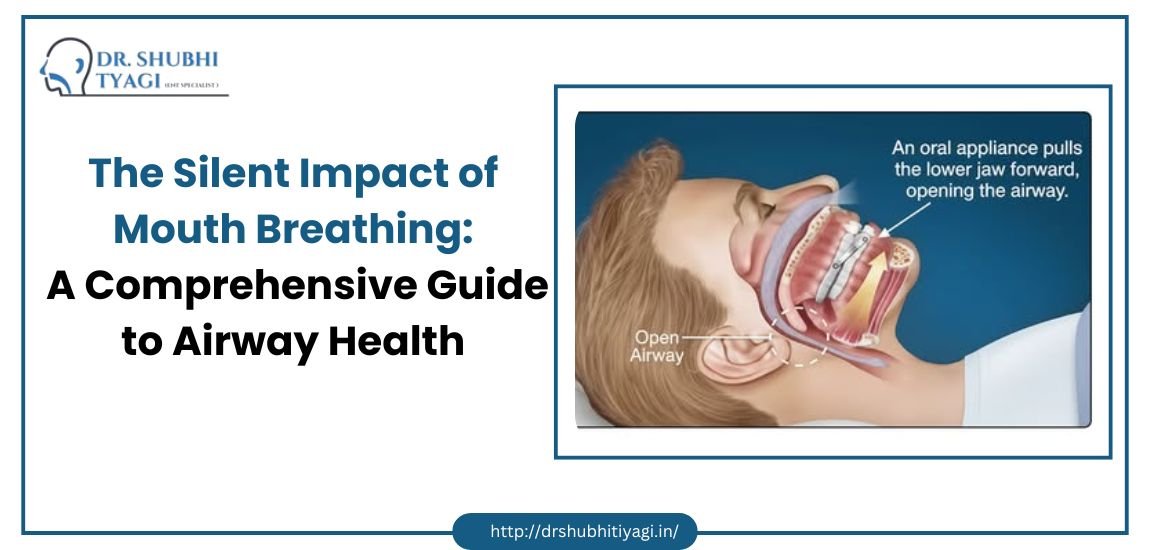
Have you ever woken up with a bone-dry throat and a foggy brain, or noticed that your child consistently keeps their mouth open while sleeping or watching television? While it might seem like a minor habit, breathing through the mouth instead of the nose is a significant clinical concern. In the medical community, we refer to this as a breakdown of the primary oral airway function, and the long-term consequences can be life-altering.
As a leading ENT Specialist in Greater Noida, Dr. Shubhi Tyagi emphasizes that the way you breathe dictates how you develop, sleep, and thrive. If you are searching for how to stop mouth breathing or are concerned about the visible side effects of mouth breathing, this exhaustive will provide the medical depth and actionable solutions you need.
The Anatomy of a Breath: Why the Mouth is a Backup, Not a Primary
Biologically, humans are “obligate nasal breathers.” Your nose is a sophisticated laboratory that filters, humidifies, and warms the air before it reaches your lungs. When you bypass this system and use your mouth as the primary oral airway, you lose these vital protections.
The Problem with an Open Mouth
When the mouth stays open, the tongue drops from the roof of the mouth. This seemingly small postural change triggers a cascade of issues. For residents in the dusty or high-pollen environments of the NCR, relying on the mouth means breathing in unfiltered pollutants and allergens directly into the lungs, exacerbating the very congestion that likely caused the mouth breathing in the first place.
Recognizing the “Mouth Breathing Face.”
One of the most profound mouth breathing side effects is the physical alteration of facial structure, particularly in children. Because the bones of the face are still malleable, a chronic open mouth posture dictates how the jaw and midface grow.
Characteristics of a Mouth Breathing Face:
- Facial Elongation: Often called “Long Face Syndrome,” where the face grows vertically rather than horizontally.
- Receding Jawline: A weak chin or “retrognathic” jaw caused by the downward pull of the facial muscles.
- Narrow Palate: Without the tongue resting on the roof of the mouth, the dental arch collapses, leading to crowded teeth.
- Dark Circles: Also known as “Allergic Shiners,” these are caused by poor venous drainage in the sinuses.
If you notice these changes, consulting an ENT doctor in Greater Noida early is crucial to prevent permanent structural changes that might later require invasive surgery.
Stop waking up exhausted. Clear your oral airway and reclaim your sleep today.
Why Saliva Comes Out While Sleeping: The Nighttime Struggle
A very common question patients ask Dr. Shubhi Tyagi is: ” Why does saliva come out while sleeping.
When you breathe through your nose, your lips remain sealed, creating a vacuum that allows you to swallow your saliva automatically during the night. However, when you have an open mouth, that vacuum is broken. Saliva pools in the back of the throat or the floor of the mouth and, due to gravity, leaks out. This isn’t just an embarrassing “drooling” issue; it is a clinical sign that your oral airway is compromised and your body is struggling to maintain a proper respiratory rhythm during sleep.
Serious Mouth Breathing Side Effects on Health
Beyond aesthetics, the mouth breathing side effects impact your systemic health:
- Sleep Disordered Breathing: Mouth breathing is the “gateway” to snoring and obstructive sleep apnea. If you are constantly tired, you may need a consultation with a Sleep Apnea Specialist.
- Dental Issues: A dry mouth lacks the protective enzymes of saliva, leading to rapid tooth decay, gum disease, and chronic bad breath.
- Speech Impediments: Many children in Noida require a Speech Therapist because their tongue thrust (caused by mouth breathing) makes it difficult to pronounce certain sounds.
- Poor Oxygen Concentration: Nasal breathing releases nitric oxide, which helps the lungs absorb oxygen. Mouth breathing lacks this, often leading to lower energy levels and ADHD-like symptoms in children.
How to Stop Mouth Breathing: Treatment Pathways
Learning to stop mouth breathing isn’t just about “trying harder” to close your lips; it’s about removing the obstruction and retraining the muscles.
Step 1: ENT Evaluation
As a trusted doctor, Dr. Tyagi first checks for physical blockages such as nasal polyps, a deviated septum, or enlarged tonsils. In many pediatric cases, the cost of the tonsil operation is a frequent concern for parents, but removing the obstruction is often the only way to restore the oral airway.
Step 2: Myofunctional Therapy
Once the airway is clear, a speech Therapist in Noida or a myofunctional therapist helps retrain the tongue to sit on the palate and the lips to stay sealed.
Step 3: Supportive Aids
Using a specialized mouth spray can help keep the tissues hydrated, while nasal dilators or “mouth taping” (under professional guidance) can help transition the body back to nasal breathing.
Dry mouth and open-mouth sleeping are signs of a bigger issue. Get an expert diagnosis.
About Dr. Shubhi Tyagi: Expert ENT Specialist
When dealing with something as vital as your breath, you need an expert with a proven track record. Dr. Shubhi Tyagi is a premier ENT doctor in Greater Noida, specializing in pediatric and adult airway disorders.
Her clinical approach integrates the latest surgical techniques such as minimally invasive tonsillectomies (helping keep the cost of the tonsil operation manageable and recovery fast)—with long-term rehabilitative care.
Frequently Asked Questions (FAQs)
Q1: What is mouth breathing and why is it harmful?
Mouth breathing means bypassing the nose’s natural filtering process. Dr. Shubhi Tyagi explains it disrupts oxygen absorption, dries the oral airway, and can trigger long-term dental and facial development issues.
Q2: How can I tell if I or my child breathes through the mouth at night?
Signs include dry throat on waking, drooling, snoring, dark under-eye circles, and a habitually open mouth during sleep or screen time key indicators Dr. Shubhi Tyagi checks during ENT evaluation.
Q3: Does mouth breathing really change facial appearance?
Yes. Chronic mouth breathing can cause “mouth breathing face” facial elongation, a receding jawline, narrow palate, and crowded teeth especially in children, since facial bones are still developing.
Q4: What causes saliva to leak out while sleeping?
An open mouth breaks the natural lip seal, disrupting the automatic swallowing reflex. Saliva then pools and leaks a clinical sign of oral airway obstruction that an ENT specialist should evaluate.
Q5: Can mouth breathing lead to sleep apnea?
Yes. Mouth breathing often progresses into snoring and obstructive sleep apnea. Dr. Shubhi Tyagi recommends early ENT evaluation to prevent airway collapse and improve long-term sleep quality.
Q6: How is mouth breathing treated in children and adults?
Treatment involves clearing nasal obstructions (polyps, deviated septum, enlarged tonsils), followed by myofunctional therapy to retrain tongue posture and restore natural nasal breathing patterns.
Q7: Is tonsil removal necessary to stop mouth breathing?
Not always. Dr. Shubhi Tyagi first assesses the airway; tonsillectomy is only advised when enlarged tonsils physically block breathing. Minimally invasive options keep tonsil operation cost manageable.
Q8: When should I see an ENT specialist for mouth breathing?
Consult an ENT specialist if mouth breathing, snoring, or facial changes persist beyond a few weeks. Dr. Shubhi Tyagi advises early diagnosis to avoid irreversible structural or health complications.
Conclusion: Reclaiming Your Breath
Mouth breathing is more than a habit; it is a structural and metabolic emergency. Whether it is the visible impact of mouth breathing, the health-draining side effects, or the simple annoyance of why saliva comes out while sleeping, the answers lie in professional intervention.
If you or your child is struggling to keep your mouth closed, don’t wait for complications to arise. Consult with Dr. Shubhi Tyagi, the leading ENT Specialist in Greater Noida, to explore your mouth breathing treatment options.
Take the First Step Toward Better Health
Ready to breathe through your nose again and wake up refreshed?
Book Your Appointment with Dr. Shubhi Tyagi