
You wake up with a scratchy throat. You keep clearing your throat through meetings. At night, you can’t sleep because something keeps dripping down the back of your throat. Sound familiar?
If you live in Greater Noida surrounded by construction dust, seasonal pollen, and fluctuating air quality you are probably no stranger to this uncomfortable experience. What you are dealing with is likely post-nasal drip, one of the most common yet chronically under-diagnosed ENT conditions affecting residents across the NCR region.
This guide authored with clinical insights from Dr Shubhi Tyagi, a leading ENT Specialist in Greater Noida will walk you through everything you need to know: what nasal drip is, what it feels like, what triggers it in our local environment, and most importantly, how to get lasting relief through the right post-nasal drip treatment.
Whether you are just now noticing the symptoms or have been struggling for months, read on — and find out exactly when you need to stop self-managing and see a specialist.
What is Post-Nasal Drip? Understanding the Basics
Let’s start with the most common question: What is post-nasal drip?
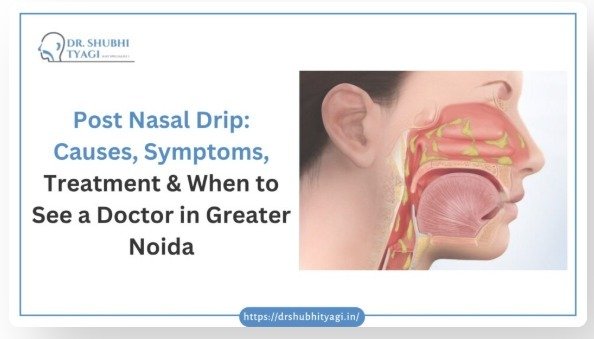
Your nose and throat are lined with mucous membranes that produce mucus continuously roughly one to two litres per day. Under normal conditions, this mucus moistens your nasal passages, traps dust and bacteria, and slides silently down the back of your throat where you swallow it without even noticing.
Postnasal drip happens when the body produces more mucus than usual, or when the mucus becomes thicker or thinner than normal, making it noticeable. Instead of draining away quietly, it pools and flows down the back of the throat, causing that signature dripping sensation.
Postnasal drip meaning, in plain language, means excess or abnormal mucus travelling from your nasal passages down the back of your throat. It’s not a disease in itself — it’s a symptom of an underlying issue. And in a city like Greater Noida, where dust, allergens, and pollution are daily realities, it is extraordinarily common.
If post-nasal drip is persistent or affecting your daily comfort, consult Dr. Shubhi Tyagi, an experienced ENT specialist in Greater Noida, for the right diagnosis and treatment based on the underlying cause.
What Does Nasal Drip Feel Like? Recognising Post-Nasal Drip Symptoms
Many patients who visit Dr Shubhi Tyagi’s clinic describe their nasal drip with phrases like “I keep feeling something dripping in my throat” or “I can’t stop clearing my throat no matter what I do.” These are the hallmark signs.
Here is a complete picture of the most common post-nasal drip symptoms to look out for:
Primary Post-Nasal Drip Symptoms
- A sensation of mucus dripping at the back of the throat – the most defining feeling
- Chronic throat clearing – a reflex to push the drainage away
- Persistent sore or scratchy throat – especially in the morning
- Coughing that worsens at night, as drainage accumulates when lying down
- Hoarseness or a rough voice – from constant mucus irritating the vocal cords
- Nausea – from swallowing large amounts of mucus, especially after waking up
- Bad breath (halitosis) – bacteria feeding on stagnant mucus
Associated Symptoms You Should Not Ignore
- Blocked or stuffy nose alongside the drip
- Sneezing, especially in the morning
- Facial pressure or heaviness around the sinuses
- Difficulty sleeping due to nighttime throat drainage
- A feeling that you are constantly about to get sick, but never quite do
If you are experiencing three or more of these post-nasal drip symptoms simultaneously, it is time to take the condition seriously.
Many Greater Noida residents mistake these symptoms for a recurring cold but if they last more than ten days without relief, postnasal drip from an underlying cause is far more likely.
Why is Post-Nasal Drip So Common in Greater Noida?
Greater Noida’s unique environment makes it a hotspot for nose and sinus complaints. Understanding local triggers is critical to understanding why nasal drip is so prevalent here and why self-medication often provides only temporary relief.
1. Dust and Construction Pollution
Greater Noida is one of India’s fastest-developing cities. Expressway construction, new residential sectors, and the continuous metro expansion around areas like Delta 1, Pari Chowk, Alpha 1, and Knowledge Park release massive amounts of construction dust and fine particulate matter.
Prolonged exposure irritates the nasal lining, triggering chronic nose drainage and mucus overproduction.
2. Seasonal Allergies (Allergic Rhinitis)
Pollen seasons in the NCR region are intense. Spring (February–April) and the post-monsoon period (September–November) bring spikes in grass and weed pollen that trigger allergic rhinitis — the single most common cause of postnasal drip in this region.
3. Air Quality and Indoor Allergens
Delhi NCR’s air quality index frequently crosses hazardous levels during winter. Breathing PM2.5-laden air causes the nasal mucosa to produce protective mucus in overdrive. Add indoor triggers like dust mites, mould from damp walls during the monsoon, and pet dander, and you have a recipe for year-round nasal drip.
4. Dry and Air-Conditioned Environments
Offices and malls in Greater Noida run powerful air conditioning systems year-round. Cold, dry air dehydrates the nasal passages and thickens mucus, making nose drainage slow and uncomfortable.
5. GERD (Gastric Reflux)
Interestingly, acid reflux is a frequently overlooked cause of postnasal drip. When stomach acid rises and irritates the throat and larynx, the body responds by producing excess mucus mimicking classic post-nasal drip symptoms with no nasal cause at all.
If your postnasal drip keeps returning despite avoiding common triggers, Dr. Shubhi Tyagi, ENT specialist in Greater Noida, can help identify the underlying cause and guide you toward appropriate treatment.
Water Coming From Nose: When Is It Just Nasal Drip and When Is It Something Else?
Many patients confuse water coming from the nose with a standard nasal drip. Here’s how to tell them apart.
Normal watery nasal discharge typically occurs when you are exposed to cold air, have a mild viral cold, or experience mild allergic triggers. It is usually bilateral (both nostrils), clears up within a few days, and is associated with other cold symptoms.
However, water coming from the nose can sometimes be a sign of something requiring immediate medical attention, particularly if:
- It is from only one nostril
- It increases when you lean forward or change your head position
- It follows a head injury or accident
- It has a slightly salty taste (CSF cerebrospinal fluid can mimic nasal fluid)
- It is accompanied by a severe headache
In most everyday cases, clear water coming from the nose is simply thin mucus from allergic or environmental triggers — an extension of classic postnasal drip. But the single-nostril, post-injury variant is a medical emergency and requires immediate ENT evaluation.
Nose Drainage: The Different Types and What They Mean
Not all nose drainage is the same, and the colour and consistency of your mucus carries important diagnostic information.
| Drainage Type: | What It Suggests |
| Clear and thin | Allergies, environmental irritants, early viral cold |
| Thick and white | Congestion, dehydration, chronic sinusitis |
| Yellow or green | Bacterial or viral infection, sinusitis |
| Brown or reddish | Dried blood, irritated nasal lining |
| Foul-smelling | Possible fungal sinusitis, foreign body (in children) |
When nose drainage is clear but persistent for weeks, it almost always points to either allergic rhinitis or vasomotor rhinitis (a non-allergic sensitivity to environmental changes). Both conditions are extremely well-managed with the right treatment, and both respond very well to personalised ENT care.
Post Nasal Drip Treatment: What Actually Works
Here is where most patients go wrong: they treat the symptom (the drip) rather than the cause (whatever is making the nose produce too much mucus). Effective post-nasal drip treatment must always address the root cause.
Dr Shubhi Tyagi follows a structured, cause-first approach at her ENT Clinic in Greater Noida to ensure patients get lasting relief, not just temporary suppression of symptoms.
1. Treating Allergic Rhinitis (The Most Common Cause)
- Antihistamines (second-generation, like cetirizine or fexofenadine)
- Intranasal corticosteroid sprays (fluticasone, budesonide) — considered the gold standard for allergic nasal drip
- Allergy testing followed by allergen immunotherapy for long-term nasal drip cure.
2. Treating Sinusitis
- Short courses of antibiotics for bacterial sinusitis
- Saline nasal irrigation (neti pot or NeilMed squeeze bottle) — highly effective for flushing out thick nose drainage
- Nasal decongestant sprays (for short-term use only — maximum three days to avoid rebound congestion)
- Functional Endoscopic Sinus Surgery (FESS) for chronic or recurring cases that do not respond to medications
3. Treating GERD-Related Postnasal Drip
- Proton pump inhibitors (PPIs) to reduce acid production
- Dietary modification — reducing spicy, oily, and acidic foods common in our North Indian diet
- Elevating the head of the bed during sleep
4. Treating Vasomotor Rhinitis
- Intranasal ipratropium bromide sprays
- Identifying and avoiding environmental triggers (cold air, smoke, strong smells)
- Humidifiers in air-conditioned rooms
5. Structural Causes
Some patients have a deviated nasal septum or enlarged nasal turbinates that prevent proper nose drainage and perpetuate postnasal drip. In these cases, surgical correction (septoplasty, turbinate reduction) provides the most effective long-term cure for nasal drip.
The right treatment depends on what is causing your postnasal drip. For an accurate evaluation and personalised treatment plan, consult Dr. Shubhi Tyagi, ENT specialist in Greater Noida.
How to Stop Post Nasal Drip: Home Strategies That Genuinely Help
Before visiting a doctor or alongside your prescribed treatment, several evidence-backed home strategies can meaningfully reduce postnasal drip.
1. Steam Inhalation Twice a Day
Inhale steam for 10–15 minutes twice daily. Add a few drops of eucalyptus oil. This loosens thick nose drainage, relieves congestion, and reduces throat irritation from dripping mucus.
2. Saline Nasal Rinse
A saline nasal rinse (isotonic or hypertonic) is one of the most effective ways to flush allergens and excess mucus out of your nasal passages. Use it morning and night. This is particularly helpful in Greater Noida’s dusty environment.
3. Stay Well Hydrated
Dehydration makes mucus thick and sticky, worsening nose drainage and throat discomfort. Aim for 2.5–3 litres of water daily.
4. Elevate Your Head While Sleeping
Post-nasal drip symptoms worsen at night because gravity is no longer helping drainage move down and away. Using an extra pillow or a wedge pillow reduces pooling at the back of the throat.
5. Avoid Known Triggers
If you know that dust, smoke, or strong perfumes worsen your nasal drip, wear a well-fitted mask (N95) outdoors, keep windows closed on high-pollution days, and use an air purifier indoors.
6. Warm Honey and Ginger Tea
A traditional remedy that has real merit: ginger has natural anti-inflammatory properties, and honey soothes an irritated throat. Two cups a day can meaningfully reduce the discomfort of postnasal drip.
How to Stop Post Nasal Drip Immediately: Quick Relief Techniques
When the drip is causing acute discomfort, and you need fast relief, these techniques can help stop post-nasal drip immediately:
- Blow your nose gently: Do not sniff the mucus back. Gentle clearing removes irritants and reduces drainage.
- Use an over-the-counter saline nasal spray: Available at any pharmacy, a few sprays provide rapid relief by thinning thick mucus.
- Gargle with warm salt water: This soothes the irritated throat and breaks down thick mucus.
- Take a hot shower: Steam opens the nasal passages and temporarily reduces the drip.
- Antihistamine tablet (OTC): For allergy-triggered nasal drip, an antihistamine can bring noticeable relief within 30–60 minutes.
Note: these strategies stop post-nasal drip immediately in the short term. They do not address the underlying cause. If you need to rely on these techniques every day, it is a clear sign you need a proper medical diagnosis.
When Should You Stop Managing at Home and See an ENT Specialist?
Knowing when to see a doctor is just as important as knowing how to manage symptoms. Dr Shubhi Tyagi recommends booking an appointment with an ENT doctor in Greater Noida if:
- Your post nasal drip symptoms have lasted more than 10–14 days without improvement
- You have tried OTC antihistamines or decongestants without lasting relief
- Your nasal drip is accompanied by facial pain, pressure, or swollen lymph nodes
- You are experiencing blood-tinged nose drainage
- Water coming from nose is unilateral (one side only)
- Your symptoms are disrupting your sleep, work, or daily life
- You have recurrent episodes of the same symptoms every season
Delaying care when these signs are present often allows a straightforward allergic condition to progress to chronic sinusitis, which is significantly harder to treat. Early intervention leads to faster, more complete recovery.
About Dr Shubhi Tyagi Your Trusted ENT Specialist in Greater Noida
When it comes to post-nasal drip treatment and all ENT-related concerns, the quality of your doctor’s training and experience makes a measurable difference in your outcomes.
Dr Shubhi Tyagi is a highly qualified ENT and Head & Neck Surgery specialist with a
comprehensive academic and clinical background:
- MBBS from Kasturba Medical College, Mangalore (Manipal University) — one of India’s most respected medical institutions
- M.S. in Otolaryngology (ENT) from Bangalore Medical College
- Extensive clinical experience at Artemis Hospitals, Gurgaon, a multi-speciality tertiary care centre
- Currently serving as Consultant, ENT and Head & Neck Surgery at Sharda Care Healthcity, Greater Noida.
- Additional practice at Radiant Health Care, Greater Noida accessible to residents from Delta 1, Jaypee Greens, and the surrounding sectors
Dr Tyagi’s expertise spans the full spectrum of ENT conditions from common nasal drip and sinusitis to complex surgeries including Tympanoplasty, Functional Endoscopic Sinus Surgery (FESS), and Head & Neck procedures. She is widely recognised for her patient-first approach, her detailed explanations, and her ability to make even complex medical situations feel manageable.
Patients across Greater Noida from Knowledge Park to Alpha 1, from Pari Chowk to Beta 1 and Delta 2 trust Dr Shubhi Tyagi for ENT care that is both medically rigorous and deeply compassionate.
Clinic Locations & How to Reach Dr Shubhi Tyagi
Clinic 1 — Sharda Care Healthcity
Room No. 133, Building 10A, Plot No. 32 & 34, Knowledge Park-III, Greater Noida, UP 201310
Clinic 2 — Radiant Health Care (New Practice)
Shop No. 20–21, First Floor, Sun Twilight Mall, Opposite Delta 1 Metro Station, Jaypee Greens, Greater Noida, UP 201308
📞 Call / WhatsApp: +91 7624 870 365
📧 Email: shubhityagi91@gmail.com
🌐 Website: drshubhityagi. in
Frequently Asked Questions (FAQs) About Post-Nasal Drip
Q1. Can post-nasal drip cause a sore throat in the morning?
Yes. Post-nasal drip can cause a sore throat in the morning because mucus may collect and irritate the throat while you sleep.
Q2. Can post-nasal drip cause difficulty swallowing?
Persistent post-nasal drip may create a mucus or lump sensation in the throat, which can sometimes make swallowing feel uncomfortable.
Q3. Can post-nasal drip cause chest congestion?
Post-nasal drainage can trigger coughing and throat irritation, but persistent chest congestion may have other causes and should be evaluated if it continues.
Q4. Can post-nasal drip cause a dry cough?
Yes. Post-nasal drip can cause a dry cough when mucus repeatedly irritates the throat, particularly when lying down or during sleep.
Q5. Can allergies cause post-nasal drip every day?
Yes. Continuous exposure to allergens such as dust, pollen, mould, or pet dander can cause daily post-nasal drip associated with allergic rhinitis.
Q6. Can post-nasal drip cause swollen tonsils?
Post-nasal drainage can irritate the throat and tonsil area, but swollen tonsils may also result from infections or other conditions requiring an ENT evaluation.
Q7. Can Dr. Shubhi Tyagi treat chronic post-nasal drip?
Yes. Dr. Shubhi Tyagi, an ENT Specialist in Greater Noida, can evaluate persistent post-nasal drip and identify possible allergy, sinus, reflux, or structural causes.
Q8. What tests are used to find the cause of chronic post-nasal drip?
An ENT specialist may use a clinical examination and, when needed, nasal endoscopy, allergy testing, or other investigations to identify the underlying cause of chronic post-nasal drip.
Conclusion: Don’t Let Nasal Drip Rule Your Life
Post-nasal drip is one of those conditions that people learn to live with — slowly adjusting to the constant throat clearing, the interrupted sleep, the persistent cough — until it becomes their “normal.” It does not have to be.
With accurate diagnosis and the right post-nasal drip treatment, most patients experience complete or near-complete relief. Greater Noida residents in particular benefit from working with a specialist who understands the local environmental triggers that make nasal drip so common here — from the dust of developing sectors to the pollen-heavy spring seasons.
If you recognise yourself in these post-nasal drip symptoms, do not wait for them to get worse. A single consultation with an experienced ENT specialist is often all it takes to set you on the path to lasting relief.
📞 Book Your Appointment with Dr Shubhi Tyagi Today
Tired of clearing your throat? Tired of sleepless nights and that relentless nasal drip?
You deserve actual, lasting relief not just another course of OTC antihistamines that stop working after a week.