
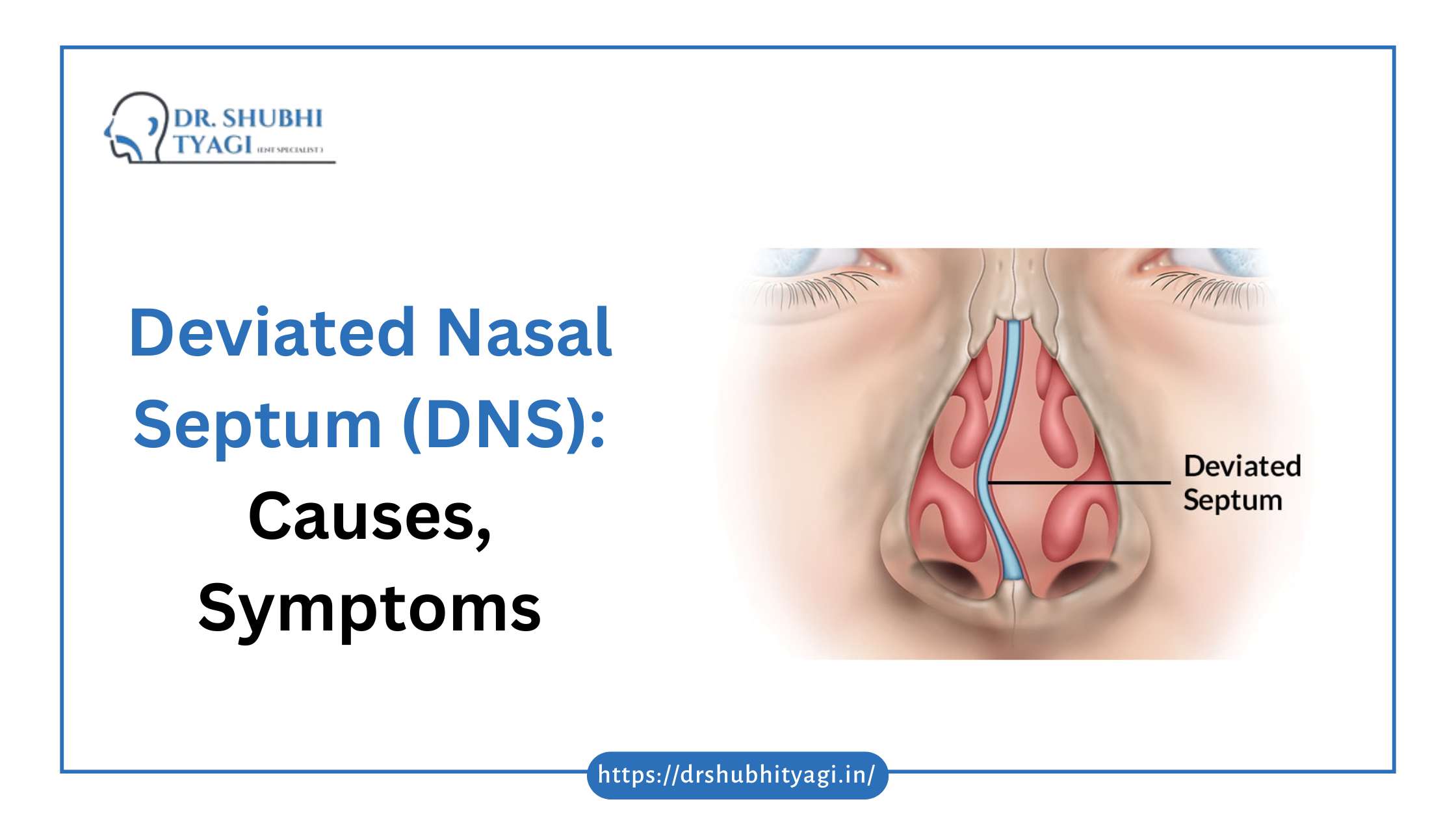
Do you constantly feel that one side of your nose is blocked, even when you don’t have a cold? Do you struggle with loud snoring, difficulty breathing while sleeping, or frequent headaches? Although these symptoms are often mistaken for seasonal allergies, they may actually be caused by a Deviated Nasal Septum (DNS), a common condition that can significantly affect your breathing and overall quality of life.
A DNS occurs when the nasal septum, the thin wall of bone and cartilage that separates the two nostrils, is displaced from the center. While a mild deviation may not cause noticeable problems, a severe Deviated Nasal Septum can restrict airflow, making it difficult to breathe comfortably through the nose and increasing the risk of chronic nasal and sinus issues.
Often referred to as the “Unseen Barrier to Breathing,” a DNS can lead to persistent nasal blockage, mouth breathing, recurrent sinus infections, snoring, and poor-quality sleep. Since these DNS symptoms closely resemble allergies, many people continue to live with the condition without seeking appropriate treatment.
If you are experiencing symptoms of DNS in Noida, consult Dr. Shubhi Tyagi, a trusted ENT doctor in Greater Noida. With a thorough evaluation and evidence-based approach, she accurately diagnoses Deviated Nasal Septum (DNS) and recommends personalized treatment options designed to improve breathing, relieve symptoms, and enhance your overall quality of life.
What is a Deviated Nasal Septum?
A deviated nasal septum occurs when the septum, which is the wall dividing the nasal passages, is off center between the right and left passages. Ideally, the septum is in the center and allows for equal airflow to both sides of the nose. When the septum is bent or off center, the width of the passages is unequal, and the narrower passage allows for less airflow. Less airflow through a passage can result in persistent nasal blockage and difficulty in breathing. Severe deviations can be of either or both nasal passages, and typically causes long-term breathing issues.
It is common for many people to have some type of slight deviation, but injuries and natural changes in the structure of a dry face can cause more severe deviations. Most cases of slight deviations do not pose any issues and do not require treatment, but it is common for a significantly deviated nasal septum to require assessment and treatment by an Ear, Nose and Throat specialist.
Understanding Deviated Nasal Septum, or DNS
The abbreviation DNS stands for a medical condition known as a Deviated Nasal Septum. This condition describes an irregular separation between the nasal cavities. DNS is among the most typically identified structural concerns in Ear, Nose, and Throat (ENT) ailments.
A lot of patients get perplexed about the DNS abbreviation because they might think that DNS IV fluid or DNS medical abbreviation refers to Dextrose Normal Saline which is also an abbreviation for an IV fluid normally used in the hospital. Although the abbreviation is the same, they refer to completely different medical terminologies.
With reference to DNS:
- DNS (ENT) = Deviated Nasal Septum
- DNS IV fluid = Dextrose Normal Saline used for Intravenous hydration
In the context of nasal obstruction, difficulty in breathing, or even DNS surgery, the abbreviation DNS when used, will be referring to Deviated Nasal Septum.
Confused about DNS or experiencing nasal blockage? Consult Dr. Shubhi Tyagi for an accurate diagnosis and personalized treatment for Deviated Nasal Septum.
The Unseen Barrier to Breathing
Normal breathing is essential for maintaining good health, yet many people don’t realize its importance until breathing becomes difficult. A Deviated Nasal Septum (DNS) is often called the “Unseen Barrier to Breathing” because it can silently restrict airflow through the nose and affect your daily life without obvious warning signs.
The symptoms of a Deviated Nasal Septum usually develop gradually, allowing many people to adapt to breathing through one nostril or relying on mouth breathing without realizing the underlying problem. Over time, DNS can significantly affect:
- The quality of your sleep
- Breathing during exercise and physical activity
- Concentration and daily productivity
- Normal sinus drainage
- Voice quality and speech
- Your sense of smell
- Overall comfort and quality of life
Because the symptoms of DNS often resemble allergies or chronic sinus infections, they are frequently overlooked. If you experience persistent nasal blockage, snoring, recurrent sinus problems, or difficulty breathing, it is important to consult an ENT Specialist. Early diagnosis and treatment can help restore normal breathing and prevent long-term complications associated with a Deviated Nasal Septum.
How Does a Deviated Nasal Septum Affect Your Breathing?
How Does a Deviated Nasal Septum Affect Your Breathing? It is one of the many questions a patient may have.
Before any air enters the lungs from the outside, the nose has several jobs to do. It can trap dust, warms up and humidifies air, and can also protect lungs from any damaging particles. When a patient has a Deviated Nasal Septum, airflow is restricted, and the nose can’t do many of its jobs.
Some of the issues with breathing can be experienced as:
- Blockage in one of the nostrils.
- Nasal breathing can be difficult.
- Breathing from the mouth.
- A feeling of blockage in the nasal cavity when there is no mucus.
- Exercising can be hard.
- Symptoms worsen when lying down.
- Less airflow can be experienced while sleeping.
Patients are known to feel the blockage of the nostril especially when sleeping. The problem can be very severe where treatment is of no use. Because the main problem is structural and not due to any inflammation.
Identifying Your Airflow Obstruction
Recognizing Identifying Your Airflow Obstruction at the right time can make a huge difference and can prevent a lot of pain and discomfort in the future.
Symptoms to look for include:
- A feeling that one nostril is blocked.
- Breathing improves but only temporarily when the sleeping position is changed.
- Nasal congestion is persistent when there is no allergy.
- Mouth breathing when sleeping occurs a lot.
- Snoring occurs throughout the year, not just during winter.
- Sleeping comfortably is difficult.
- Recurrent sinus pressure.
An ENT Specialist in alpha can identify the cause of the problem which are symptoms of allergies or nasal polyps or are due to a Deviated Septum or enlarged turbinates.
Can a Deviated Nasal Septum Cause Other Health Problems?
The most commonly asked question is:
Can a Deviated Nasal Septum lead to other health issues?
The answer is yes. A poorly deviated nasal septum can lead to many chronic ENT issues if nothing is done to treat it.
With blocked airflow, sinus drainage becomes normalized and sinus infections and drainage increases. Breathing through your mouth while sleeping decreases quality of sleep and increases fatigue.
The following issues can arise:
- Chronic Nasal Congestion
- Sinusitis
- Epistaxis
- Facial Pain, Pressure, other Headaches
- Snoring, Sleep Issues, and Mouth Breathing
- Decreased sense of smell
- Difficulty with Exercise
- Dry mouth and throat
While not all patients with a Deviated Nasal Septum suffer from these issues, it is best to see an Specialist for a full evaluation if they are having chronic issues.
DNS Symptoms You Should Never Ignore
DNS symptoms vary based on severity of septum displacement. Some people have minor symptoms, while others have daily severe breathing symptoms.
Common DNS symptoms:
Chronic Nasal Congestion: There is often one blocked nostril for weeks or months at a time; in many cases, there is no infection causing this symptom.
Frequent Sinus Infections: Sinus drainage becomes obstructed, causing mucus to build and infection risk to increase.
Recurrent Nosebleeds: Irritated dry nasal tissue can begin to bleed, especially in dry weather.
Facial Pain or Pressure: The build-up and obstruction of sinus drainage creates pressure in the cheeks, forehead, and eyes.
Headaches: Blocked nasal passage and pressure build-up suggested to be the source of headaches for many patients.
Snoring and Sleep Disturbances: Airway obstruction can cause significant sleep disruption and snoring.
Mouth Breathing: Obstructed nasal passage causes many patients to breathe through the mouth while sleeping.
Reduced Sense of Smell: Long term nasal obstruction affects the ability to smell.
If you are having these DNS symptoms for a long time, despite over the counter medication, you should see an ENT for a deeper evaluation. It is recommended to see an ENT in Greater Noida.
Causes and Deviated Nasal Septum Types
Knowing the Types and Causes of Deviated Nasal Septum is important for knowing the correct treatment.
Not all Deviated Nasal Septum cases are the same. Some cases are seen from birth, and some cases are developed from injuries or growth of the face.
What makes a Nasal Septum Deviated?
Many patients develop the same inquiry, What makes a Nasal Septum Deviated?
Some of the causes are:
Congenital: Some babies are born with a Deviated Nasal Septum which is a result of the positioning of the baby in the womb in combination with the birthing process.
Trauma or Injury: Sports injury, road accidents, or injuries from falling or from childhood can result in a permanent shift of the nasal septum.
Developmental Changes: Facial bones can grow and develop during the teenage years, and with that growth and development, the nasal septum can develop a curvature.
These causes are frequent enough for patients to seek the necessity of a DNS treatment.
Types of Deviated Nasal Septum
Doctors analyze the shape and direction of the deviation to assess the type of Deviated Nasal Septum.
- C-Shaped Deviation: A Nasal Septum that shifts to one side.
- S-Shaped Nasal Septum: A Nasal Septum that shifts to both sides and hence obstructs both sides.
- Septal Spur or Crest: An obstruction in the shape of a spur that develops along the septum.
- Caudal Deviation: A deviation that affects the shape of the Nose, and the function of Nasal Breathing.
- Deviated Septum vs Normal Septum: By knowing Deviated Septum vs Normal, it can inform patients the reason for the symptoms.
Normally, the nasal septum creates equal airflow through both nostrils. However, Deviated Nasal Septum causes one side to narrow and forces air through a smaller passage, thereby increasing resistance in breathing.
How Is a Deviated Nasal Septum Diagnosed?
If you have DNS with nasal blockages, sinus infections, snoring, or breathing issues, an experienced specialist may properly assist you with your needs. An accurate diagnosis may identify if you have a Deviated Nasal Septum or an allergy, nasal polyps, enlarged turbinates, or chronic sinusitis.
Dr. Shubhi Tyagi is an excellent ENT specialist in Greater Noida. Consulting with Dr. Tyagi means going over your symptoms in detail, your medical history, your past injuries, any allergies, and issues you may have with sleep. Each plan to alleviate DNS is customized to the patient with the particular needs of the individual accounted for.
Physical Examination (Anterior Rhinoscopy)
A physical examination (anterior rhinoscopy) is the first step in a deviated nasal septum diagnosis.
During the examination, the specialist uses a nasal speculum and strong examination light to view the inside of your nose for:
- Position of the nose’s septum
- The degree of nasal blockage
- Swelling in the nose
- Infection
- Nasal polyps
- Bleeding
- Nasal mucosa
The process is quick and easy. It is a valuable first step in an early diagnosis for the deviated nasal septum.
Nasal Endoscopy
Deviations of the septum can, and often will, require a more in-depth examination. In these cases, nasal endoscopy is performed.
Nasal endoscopes are tubes that contain a camera and light. They are used to get a more in-depth view of the nasal passages and structures.
Nasal endoscopy can view:
- Severe deviations of the nasal septum
- Septal spurs
- Blocked sinus openings
- Chronic inflammation
- Nasal polyps
- Enlarged turbinates
- Airflow obstruction
This examination routinely takes only a few minutes and is very informative for the treatment that is being planned.
CT Scan
Your ENT doctor in beta may recommend a CT Scan if surgery is an option or if you may have complications.
A CT Scan provides many cross-sectional images of the sinuses and nose. It can assess:
- Severe deviation of the septum
- Chronic sinus infections
- Nasal bone abnormalities
- Nasal anatomy
- Chronic sinus disease
A CT scan is very helpful prior to the surgery of a Deviated Nasal Septum to help the surgeon visualize the anatomy of the nose.
What is the Conservative option for a Deviated Nasal Septum?
Surgery is not an option if the deviation is not significant, as medication can be prescribed to lessen the swelling of the nasal passages and improve the ease of breathing. It is vital to note, however, that medication cannot fix a bent septum. The medication can only assist with the inflammation.
Some common Conservative options are:
- Nasal Steroid Sprays or Antihistamines.
- Nasal Steroid Sprays or Antihistamines can help with swelling.
- If allergies are causing nasal swelling, these options are very helpful.
There are many benefits:
- Less inflammation
- Airflow improves
- Sleep improves
- Less sinus pressure
Decongestants
Decongestants temporarily reduce the swelling of nasal tissue.
Available in tablets and nasal sprays, nasal decongestant sprays should not be used for long periods. These sprays can actually cause congestion to worsen when used too much.
Saline Rinses: Saline Rinses are a safe home treatment.
Saline irrigations help to:
- Eliminate allergens
- Remove mucus
- Minimize crusting
- Enhance nasal cleanliness
- Aid drainage of the sinuses
Patients often feel significant improvement when combined with prescribed medications.
What Is Septoplasty?
Septoplasty is currently the surgical procedure with the longest track record of safety and efficacy for the treatment of Deviated Nasal Septum. It entails realignment and reconstruction of the cartilaginous or bony framework of the nose with the removal of the elements having a deviation. In comparison with cosmetic rhinoplasty, when septoplasty is performed, the primary concern of the surgeon is the functionality of the nasal structures and not the aesthetics.
Septoplasty has undergone rapid improvements which have made the surgery far more convenient and comfortable than in previous decades.
These improvements have made the benefits of septoplasty far more available:
- Breath easier
- Sleep better
- Snore less
- Infection less
- Exercise more
- Life better
When Should You Consider Surgery (Septoplasty)?
For patients with serious issues breathing, medication typically only works for a short period of time. Because of that, surgery may be a recommendation from your ENT specialist.
People often ask:
When Should You Consider Surgery (Septoplasty)?
Septoplasty is typically recommended when the following conditions are present:
- Nasal blockage occurs often and is persistent.
- Breathing does not improve despite the use of medication.
- The patient suffers from persistent sinus infections.
- The patient has frequent nosebleeds.
- The quality of the patient’s sleep is disrupted due to snoring.
- A Deviated Nasal Septum limits the patient’s ability to perform everyday tasks.
- There is severe restriction of the airflow.
The target of the surgery is to help make breathing easier by restoring the position of the nasal septum while still keeping the function of the nasal system normal.
If persistent nasal blockage or breathing difficulties are affecting your daily life, consult Dr. Shubhi Tyagi for an expert evaluation to determine if Septoplasty is the right treatment for you.
DNS Surgery
The acronym for Deviated Nasal Septum, DNS Surgery elicits a great deal of anxiety for a lot of patients. However, with the advancements in modern medicine and the skilled execution by a qualified ENT Specialist, the safety and success of the DNS Surgery procedures have greatly improved.
The majority of procedures DNS Surgery entails the following:
- Local or general anesthesia
- No external scars
- Internal septum correction
- Autonomous discharge in the majority of cases
- Short recovery time
The length of the recovery time is variable but most people return to their normal day to day routines in 1 – 2 weeks.
Recovery After Septoplasty
Most patients experience a positive recovery after following their doctors’ recommendations.
Recovery from a Septoplasty is predictable and the first few days of recovery are characterized by:
- Nasal congestion
- Swelling
- Discomfort
- Mild breathing obstruction
The majority of patients experience a continuous and slow improvement in their symptoms for weeks after surgery.
Your ENT doctor in delta may recommend:
- Saline rinses
- Medications
- Heavy lifting should be avoided
- Increase the elevation of the head while sleeping
- Attend follow-up appointments to evaluate healing
After DNS Surgery, following the recommendations of your specialist will maximize the improvements.
Deviated Nasal Septum and Genetics
Another popular question is whether a deviated nasal septum is hereditary.
The answer is yes and no.
It’s common for the deviated nasal septum to be congenital; this is due to inherited structures of the face and the way the face develops. However, this is not the only way a deviated septum can occur. Injuries to the nose and other natural conditions that affect the face can also cause deviated septums.
It is important to know that nasal obstructions seen in multiple members of a family is not reason enough to skip the necessary examination; most likely each family member’s nasal anatomy is different.
Deviated Nasal Septum and Health Issues
Many patients do not understand the effect that a deviated nasal septum can have on a patient’s health.
A more pronounced deviated nasal septum can lead to the following health issues:
- Chronic Nasal Congestion
- Chronic Sinus Infections
- Chronic Nose Bleeds
- Facial Pain
- Headaches
- Breathing through the Mouth
- Snoring and Sleep Issues
It has also been found that a deviated nasal septum can contribute to poor sleep quality and excessive daytime sleepiness because deviated nasal septums can lead to restricted air passage during sleep.
Identifying the issues caused by a deviated nasal septum can help the specialist identify the best method of treatment so that the symptoms do not worsen.
Living with a Deviated Nasal Septum
A deviated nasal septum impacts people’s lives in various ways, but many adapt without realizing. Mouth breathing, not sleeping well, feeling fatigued, and having sinus infections are common complaints, but many do not know that treatment can improve breathing.
If your symptoms are affecting your daily activities like work or sleep, consider seeing an ENT physician in Greater Noida to see if Septoplasty or nasal septum deviation repair is necessary.
Finding Care in Noida for a Deviated Nasal Septum
Don’t overlook nasal obstruction, shortness of breath, or ongoing sinus infections. Difficult symptoms like these merit a visit to a certified ENT. Doing so will lessen the likelihood of complications and help you to regain some normality in your life.
If you live in Noida and are looking for reputable healthcare, look no further. Dr. Shubhi Tyagi is a distinguished ENT healthcare provider in Greater Noida. He has ample experience with the range of conditions that plague the ear, nose, and throat. He is qualified to treat patients with Deviated Nasal Septum, among other conditions. Venturing to an appointment with symptoms of any magnitude will allow him to assess you and construct a tailor fit treatment approach to your condition.
Patients in cutting-edge Noida ENT clinics can take advantage of the best evaluation strategies, specialized consultations, and strategies to quell their symptoms while also improving their nasal health.
Why Choose Dr. Shubhi Tyagi for Deviated Nasal Septum Treatment?
Outcomes for treating a Deviated Nasal Septum improve significantly with skill and correct diagnosis. Every patient has a different anatomy and, therefore, a different treatment.
Dr. Shubhi Tyagi cultivated great rapport with her patients built on her particular attention to their needs and her thorough, evidence-based practice of ENT.
DNS Treatment Plan
Patient experiences with Deviated Nasal Septum (DNS) vary greatly. The severity of symptoms can be classified as mild and can even be treated with medications or can even be classified as severe with the necessity of an overcorrection.
A customized DNS treatment plan includes the following steps:
Step 1: Understanding the Cause of Your Symptoms
Understanding the cause of your symptoms can range from Deviated Nasal Septum, Allergies, Chronic Sinusitis, or Turbinate Hypertrophy.
Step 2: Mild Symptoms and Conservative Management
If symptoms are mild, the treatment plan may include medications as well as nasal care and may improve symptoms of airflow.
Step 3: Watching Your Symptoms
If symptoms worsen, it may be necessary to constantly monitor your symptoms.
Step 4: When Conservative Management Does Not Work
When symptoms of nasal airflow significantly worsen and conservative management does not work, Septoplasty may be recommended.
DNS Surgery in Noida
As always, patients are curious about the safety and efficacy of the DNS surgery in Noida.
Yes, modern DNS surgery is a highly developed and successful surgery performed by highly trained and experienced ENT specialists in Noida Dr. Shubhi Tyagi.
Preparing for Septoplasty
Here are steps you can take to make your Septoplasty procedure and healing be as smooth as possible.
Your doctor may ask you to prepare by doing the following:
- Get some routine blood tests
- Get a CT scan if you need it
- Tell the doctor what meds you take
- Avoid smoking
- Stop blood thinning meds for a time if you are able
- Fast for a time if instructed to
Taking the time to prepare reduces your risks for surgery and makes recovering easier.
Tips to Make Recovery After DNS Surgery Easier
Recovery from surgery for DNS is a simple process. Making sure to follow your doctor’s instructions will help recovery be the best it can be.
Some things that will help are:
- Avoid exercise for 14 days
- Keep your head elevated while you sleep
- Avoid blowing your nose
- Follow instructions for saline rinses
- Follow instruction for medicine
- Go to appointments
- Drink water
- Avoid dusty and smoky places
After surgery, most patients can tell a big difference in how they breathe in just a few weeks.
Can a Deviated Nasal Septum Be Prevented?
Some cases of Deviated Nasal Septum, such as congenital cases or cases related to naturally occurring changes in facial morphology, are unavoidable. Nevertheless, injury-related cases can be somewhat avoided. Here are some ways you can protect your nose:
- Play contact sports using protective headgear.
- Always wear your seatbelt.
- Protect children when they are playing. Supervise them to help prevent injuries.
- After a nasal injury, seek medical help as soon as possible.
Some complications related to trauma can be avoided as long as you get medical help early.
When Do You See an ENT?
You should see an ENT in Greater Noida when you have one or more of these conditions:
- One-sided nasal blockage
- Difficulty breathing through the nose
- Frequent sinus infections
- Frequent nosebleeds
- Difficulty sleeping due to snoring
- Mouth breathing
- Facial pain or pressure
- Nasal symptoms that do not respond to medication
The health of your respiratory system and your overall health will suffer the longer you ignore these symptoms.
Don’t ignore persistent nasal symptoms. Book a consultation with Dr. Shubhi Tyagi, an experienced ENT specialist in Greater Noida, for accurate diagnosis and personalized treatment to help you breathe better.
Conclusion
A deviated nasal septum can restrict airflow through the nasal passages and lead to considerable issues for the quality of life, such as sleeping and breathing problems. For those with mild septum deviations, medications may provide some relief. However, the only way for those with severely deviated nasal septum to restore proper airflow may be through Septoplasty by a medical professional.
Symptoms of deviated nasal septum (DNS) worsen your quality of life. The only way to improve quality of life is through early detection and proper treatment.
Dr. Shubhi Tyagi, an ENT specialist, can help those looking for personalized treatment to help manage their DNS with conservative methods or surgery. She provides patients with advanced diagnosis and management for their ENT conditions, including DNS. Those needing treatment for DNS in Noida can trust that their treatment will be personalized to their needs.
Frequently Asked Questions
Q1: Why can I breathe through one nostril but not the other?
A deviated nasal septum can make one nasal passage narrower, causing one-sided blockage or difficulty breathing through one nostril.
Q2: Can a deviated septum get worse with age?
Yes, changes in nasal structures with age can make deviated septum symptoms and breathing difficulties more noticeable over time.
Q3: Can DNS cause repeated sinus infections?
A significant deviated nasal septum can affect nasal airflow and drainage and may contribute to recurring sinus problems in some people.
Q4: Can a deviated septum affect the sense of smell?
A severe deviated septum may reduce airflow and affect the ability to smell, although allergies, infections, and other conditions can also cause reduced smell.
Q5: Is septoplasty painful after DNS surgery?
Some patients experience temporary soreness, pressure, congestion, or discomfort after septoplasty, with recovery varying from person to person.
Q6: Why is my nose still blocked after septoplasty?
Temporary blockage can occur due to swelling and healing after DNS surgery; persistent symptoms should be evaluated by your ENT specialist.
Q7: Can a deviated septum come back after septoplasty?
Breathing problems can sometimes persist or return after septoplasty, so an ENT examination is important to identify the underlying cause.
Q8: Where can I get expert DNS treatment in Noida?
Dr. Shubhi Tyagi provides ENT evaluation and personalized deviated nasal septum treatment in Noida based on the patient’s symptoms and nasal condition.