
An ear infection is frequently perceived as a minor childhood ailment. However, when it manifests in adults, it presents a distinct set of clinical challenges. For mature individuals, persistent ear discomfort can indicate deep-seated bacterial or viral pathogens, severe structural problems, or systemic health risks. Neglecting these signals can result in long-term complications, such as permanent hearing degradation or chronic structural damage to the delicate cranial pathways.
If you are experiencing unexplained pressure, sharp pain, or unusual discharge, understanding the precise ear infection symptom in adult is crucial. Diagnostic precision ensures that ordinary inflammatory ear diseases are not mistaken for complex structural issues or systemic concerns.
This comprehensive medical guide explores adult ear infections, their primary symptoms, clear clinical warning signs, and the advanced diagnostic options available under the guidance of Dr. Shubhi Tyagi, a leading ENT specialist in Greater Noida.
1. Defining Adult Ear Diseases: Anatomical Frameworks
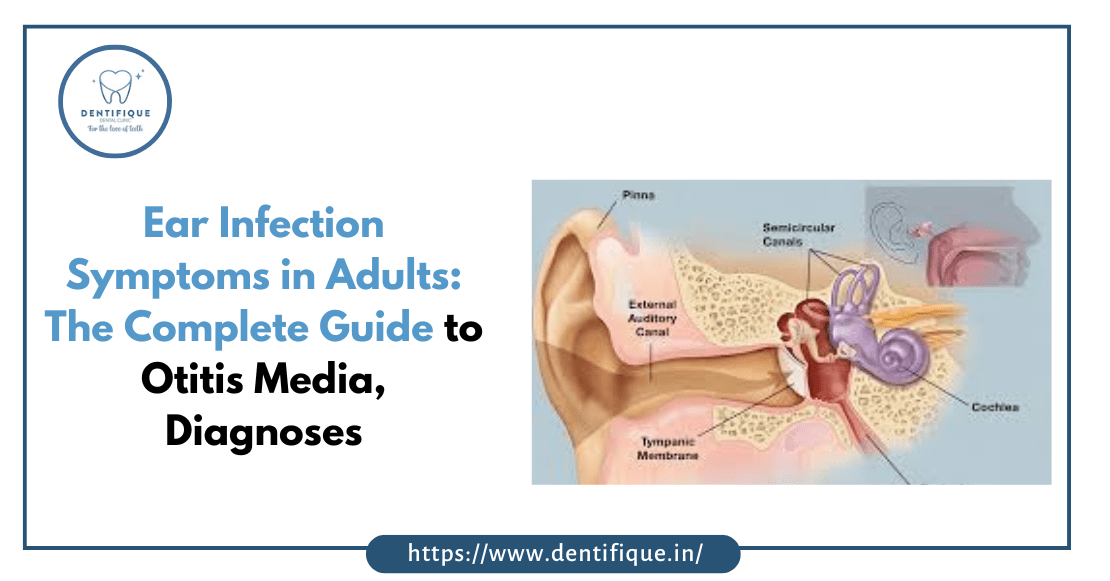
To accurately categorize these conditions, medical professionals divide the ear into three distinct anatomical segments: the outer, middle, and inner ear.
The Outer Ear (Otitis Externa)
Commonly referred to as “swimmer’s ear,” otitis externa involves inflammation of the external auditory canal. This channel runs from the outer pinna directly to the tympanic membrane (eardrum). It frequently develops when moisture remains trapped in the canal, creating an environment where bacteria or fungi can thrive. Minor abrasions from cotton swabs, keys, or hairpins can also cause it. This localized ear canal infection requires targeted topical treatment.
The Middle Ear (Otitis Media)
This condition involves an infection behind the tympanic membrane within the air-filled middle ear cavity, which houses the ossicles (the tiny vibrating bones vital for hearing). Otitis media in adults often follows an upper respiratory tract infection, allergy flare-up, or sudden change in environmental pressure. These issues can cause the Eustachian tube to swell and lock fluid within the middle ear space, leading to secondary bacterial colonization. This type of middle ear infection requires careful clinical monitoring.
The Inner Ear (Otitis Interna or Labyrinthitis)
An infection or inflammation of the deepest structures of the ear—the cochlea and the vestibular system—is less common but clinically significant. Inner ear conditions typically present as systemic inflammation rather than a localized bacterial infection. They can disrupt spatial orientation, causing sudden vertigo, severe nausea, and acute sensory changes.
2. Primary Signs and Ear Infection Symptoms in Adults
Recognizing ear infection symptom in adults requires evaluating localized pain alongside systemic bodily changes. Unlike children, who may only present with a fever or pull at their ears, adults can track and explain specific changes in their sensory perception and physical comfort.
Sharp, Dull, or Throbbing Pain (Otalgia)
Pain is usually the most noticeable indicator of a developing ear infection. In cases of an ear canal infection, this pain often intensifies when pressure is applied to the tragus (the small cartilage projection in front of the canal) or when the earlobe is pulled down. For a middle ear pain, the pain is typically described as a deep, persistent, throbbing ache that can radiate across the jawline, temporal region, and side of the neck. These ongoing ear problems should never be ignored.
Fluid Discharge (Otorrhea)
The presence of unusual fluid draining from the ear canal is a clear indicator of ear infection symptoms that require professional evaluation. The characteristics of this fluid can vary based on the underlying cause:
- Clear or Serous Fluid: Often indicates early-stage outer irritation or a serous effusion behind the eardrum.
- Thick, Yellow, or Green Purulent Discharge: Typically signals an active bacterial ear infection.
- Blood in sputumor Malodorous Discharge: A critical warning sign among ear diseases that may indicate a ruptured tympanic membrane or a more complex underlying growth or lesion.
Unilateral Hearing Loss or Muffled Auditory Perception
When fluid, inflammatory debris, or cellular swelling fills the ear canal or middle ear space, sound waves cannot easily reach the inner nerve pathways. This creates a noticeable muffled sensation, often described as feeling like the ear is trapped underwater. This temporary drop in volume is known as conductive hearing loss. It generally resolves once the infection is cleared and structural blockages are removed.
Sensation of Fullness, Pressure, and Tinnitus
A persistent feeling of internal pressure or congestion is a common element of ear infection symptoms. This occurs when the Eustachian tube fails to normalize air pressure between the back of the throat and the middle ear space. This pressure variance can cause the eardrum to stretch unnaturally, triggering tinnitus—a persistent ringing, buzzing, clicking, or roaring sound in the ear.
3. Underlying Otitis Media Causes and Structural Triggers
An effective treatment plan depends on identifying the specific otitis media causes that allow pathogens to take hold in the middle ear space. Adult ear infections rarely happen in a vacuum; they are usually tied to structural or environmental triggers.
PRIMARY OTITIS MEDIA CAUSES
1. EUSTACHIAN TUBE BLOCKAGE:
- Swelling from allergies or viral colds
- Prevents the middle ear from draining naturally.
2. RESPIRATORY INFECTIONS:
- Bacteria travel upward from the nasal
- Passages into the middle ear cavity.
3. STRUCTURAL ISSUES:
- Deviated septums, nasal polyps, or tissue growths
- Can alter airflow and fluid clearance.
Eustachian Tube Dysfunction (ETD)
The Eustachian tube connects the middle ear cavity to the back of the nasal passages, regulating air pressure and draining fluid. When allergies, chronic rhinitis, or an upper respiratory infection cause this tube to swell, it can lock fluid within the middle ear space. This trapped fluid creates an ideal breeding ground for pathogens, leading to acute otitis media.
Barotrauma and Rapid Pressure Changes
Sudden, severe changes in environmental pressure—such as during air travel, mountain driving, or scuba diving—can stress the tympanic membrane if the Eustachian tube cannot equalize pressure quickly enough. This physical stress can cause minor tissue tears or fluid accumulation, predisposing the area to a secondary bacterial ear infection.
Chronic Sinusitis and Environmental Irritants
Long-standing inflammation of the nasal cavities can lead to chronic fluid pooling around the openings of the Eustachian tubes. Exposure to secondhand smoke, chemical fumes, or heavy urban air pollution can also inflame these delicate tissues. This inflammation compromises the body’s natural clearing mechanisms, making the ear more vulnerable to various ear diseases.
4. Classifications: Types of Otitis Media in Adults
When you consult an ENT your doctor in pari chowk condition will be classified based on its progression, duration, and the presence of fluid. Understanding the distinct types of otitis media helps determine the most effective approach to care.
Acute Otitis Media (AOM)
This is a sudden, rapid-onset infection characterized by severe, throbbing pain, an inflamed eardrum, and fluid accumulation. It is often a primary cause of acute ear infection symptoms in adults and is frequently accompanied by a low-grade fever and a sudden drop in hearing clarity.
Otitis Media with Effusion (OME)
Also known as “serous otitis media,” this condition occurs when fluid remains trapped behind the eardrum even after an acute infection has cleared. While it may not cause sharp pain or a fever, patients often experience a persistent feeling of fullness, muffled hearing, and clicking sounds when swallowing. If left untreated, chronic fluid can stiffen the eardrum and surrounding structures.
Chronic Suppurative Otitis Media (CSOM)
This is a more serious, long-standing condition involving a persistent, non-healing tear or perforation in the eardrum. It is characterized by recurring, foul-smelling fluid drainage and progressive hearing loss. Because the protective barrier of the eardrum is compromised, the middle ear is constantly exposed to external bacteria, making these ear problems challenging to manage without specialized care.
5. Clinical Management: Selecting Antibiotics for Ear Infection Care
When diagnostic protocols confirm an active bacterial middle ear infection, the targeted use of antibiotics for ear infection management becomes a necessary path of care. It is vital to recognize that antibiotics are solely effective against bacterial pathogens and have zero efficacy against viral or fungal strains.
Diagnostic Presentation
| Bacterial Infection | Viral/Fungal Otitis |
| Requires targeted oral/topical | Treated via supportive care |
| antibiotics for ear infection | Treated via supportive care |
| Must complete anti | inflammatory drops |
Topical vs. Oral Antibiotics for Ear Infection Care
The choice between topical drops and systemic oral medication depends on the exact location of the disease:
- Topical Antibiotic Drops: Highly effective for an ear canal infection because the medication is applied directly to the inflamed skin cells.
- Oral Systemic Antibiotics: For conditions like acute otitis media, topical drops cannot pass through an intact eardrum. Systemic antibiotics for ear infection care are required to reach the middle ear cavity through the bloodstream.
The Importance of Completing the Treatment Course
A common mistake when managing ear infection symptoms in adults is stopping antibiotic treatment early once the initial pain improves. Stopping treatment prematurely can leave stronger bacteria alive, leading to a recurring infection that is harder to treat. Following the full prescription helps ensure the infection is completely cleared and lowers the risk of chronic issues.
6. Advanced Clinical Complications of Neglected Otitis Media
Leaving ear infection symptom in adults unaddressed can lead to serious health complications. The structures of the human ear are located near major cranial nerves, vital blood vessels, and brain tissues. Uncontrolled bacterial infections can spread beyond their initial site, leading to more complex health challenges
Untreated Middle Ear Infection
| Mastoiditis | Perforation | Facial Nerve Palsy |
| Infection spreads, | Eardrum tears | inflammation compresses |
| to the cranial | due to fluid | seventh cranial |
| structures | pressure nerve | causing weakness |
Tympanic Membrane Perforation (Ruptured Eardrum)
When purulent fluid accumulates inside the middle ear cavity during acute otitis media, it applies constant pressure to the thin tympanic membrane. If this pressure builds too high, the delicate tissue can tear or rupture. Patients often report a sudden, sharp stab of intense pain followed by immediate relief and noticeable fluid drainage. While many small tears can heal on their own, larger perforations often require surgical intervention, such as a tympanoplasty, to restore hearing and protect the middle ear space.
Mastoiditis
If a middle ear infection spreads backward into the mastoid process—the porous, air-filled bony structure located directly behind the outer ear—it can cause a serious condition known as mastoiditis. This complication presents with prominent redness, swelling, tenderness, and throbbing pain behind the ear pinna. It can cause the outer ear to push forward slightly and requires intensive intravenous antibiotic therapy or surgical drainage to prevent bone damage.
Cholesteatoma Development
Chronic Eustachian tube issues can lead to long-term negative pressure within the middle ear. This can pull a small portion of the tympanic membrane backward, creating a pocket where dead skin cells accumulate. Over time, this pocket can develop into a benign, destructive cyst called a cholesteatoma. This growth can gradually erode the surrounding ossicles and bone tissue, causing permanent hearing loss and requiring specialized microsurgery to remove safely.
Intracranial Spread (Meningitis and Brain Abscess)
In rare cases, an unaddressed ear infection can travel upward through thin bony pathways or local venous systems into the cranial vault. This can lead to serious life-threatening complications, including meningitis (inflammation of the protective membranes surrounding the brain and spinal cord) or a localized brain abscess. Key warning signs include a high fever, severe headache, stiff neck, sensitivity to light, and cognitive confusion.
Tympanometry and Acoustic Immittance Testing
This diagnostic test measures how the eardrum moves in response to gentle shifts in air pressure. It generates a graph called a tympanogram, which helps identify fluid accumulation in the middle ear, Eustachian tube dysfunction, or issues with the tiny bones of the middle ear.
Pure Tone Audiometry
Conducted in a sound-isolated booth, this test measures a patient’s hearing thresholds across a range of frequencies. By comparing how sound travels through the air versus through bone conduction, the specialist can determine if hearing loss is conductive (caused by fluid or a blockage) or sensorineural (involving inner ear nerve pathways).
Targeted Radiological Imaging (CT and MRI Scans)
For chronic, unyielding symptoms, severe dizziness, or suspected bone involvement, advanced imaging may be recommended. A high-resolution CT scan provides detailed views of the delicate bony structures of the ear and mastoid process, while an MRI offers clear images of soft tissues, nerve pathways, and cranial structures.
Don’t wait for a simple ear ache to turn into something more serious. Get a proper medical checkup from the best ENT doctor in Noida.
Exceptional Surgical and Clinical Training
Dr. Shubhi Tyagi brings extensive specialized experience to her role as a Consultant in the Department of ENT at Sharda Hospital, Greater Noida. She completed her intensive medical training at one of Asia’s premier, high-volume surgical ENT institutions: Bangalore Medical College and Victoria Hospital. This rigorous background provided her with extensive hands-on experience in managing a wide range of simple and highly complex ear, nose, and throat conditions.
Known as an accomplished clinician and sleep apnea specialist she handles upper airway anatomy issues, snoring, and sleep-disordered breathing alongside complex otological conditions. Her patient-centered approach focuses on clear communication, thorough diagnostic evaluations, and personalized treatment plans designed for long-term health.
Comprehensive FAQ: Expert Answers to Common Questions
1. Can an adult middle ear infection go away on its own without medical treatment?
Some mild, early-stage ear irritations caused by minor viral congestion can resolve as the body clears the underlying cold. However, active bacterial infections in adults often require targeted prescription care. Leaving a persistent infection untreated can lead to complications like a ruptured eardrum or chronic fluid retention. A specialist should evaluate any symptoms lasting more than 48 hours.
2. How can I distinguish between a standard ear infection and TMJ jaw pain?
Because the nerves supplying the ear and the temporomandibular joint (TMJ) are closely linked, jaw issues can easily feel like an earache. Generally, a true ear infection includes symptoms like muffled hearing, fluid drainage, or an internal feeling of pressure. TMJ pain, on the other hand, is usually triggered by chewing, yawning, or pressing on the jaw joint, and is rarely accompanied by hearing changes or fluid.
3. What is the primary connection between persistent ear fluid and systemic health?
In adults, a persistent accumulation of fluid in one ear without an obvious cause (like a recent cold) requires careful evaluation. In some cases, chronic fluid buildup can occur if the Eustachian tube is blocked by unusual tissue changes or asymmetric growths in the nasopharyngeal space. A comprehensive ENT examination ensures that any deep structural blockages are identified and managed early.
4. Why do ear infection symptom in adults sometimes cause severe localized vertigo?
The inner ear houses the vestibular system, which controls your body’s balance and spatial awareness. When an infection causes significant inflammation or fluid pressure nearby, it can disrupt the delicate balance of signals sent to the brain. This can result in vertigo, a spinning sensation, or general unsteadiness, which typically resolves once the underlying inflammation is treated.
5. What should I avoid doing if I suspect my eardrum has ruptured
If you suspect your eardrum has torn—especially if you notice a sudden drop in pain followed by fluid or blood-stained drainage—it is vital to keep the ear completely dry. Avoid swimming, do not use over-the-counter ear drops unless directed by a doctor, and never insert cotton swabs or other objects into the canal. Seek a professional ENT evaluation promptly to protect the area from infection.