
While ear infections are a phenomenon more common in children, adults can also have them. In fact, Ear Infection Symptoms in Adults may actually be much more complicated as they can be associated with allergies, sinus infections, anatomical problems or ongoing inflammation. Even though some infections settle with adequate treatment, others can present with hearing difficulties, balance problems and lead to chronic complications when ignored.
Early Ear Infection Symptoms in Adults recognition can lessen long-term effects, prevention is better for serious health concerns and increase rates of recovery. Whether it is constant pain in your ear, change in hearing, dizziness or any sort of discharge, timely medical advice and care is required. Understanding ear infection symptoms in adults early can help prevent serious complications and protect long-term hearing health.
This comprehensive medical guide explores adult ear infections, their primary symptoms, clear clinical warning signs, and the advanced diagnostic options available under the guidance of Dr. Shubhi Tyagi, a leading ENT specialist in Greater Noida.
Understanding Ear Infections in Adults
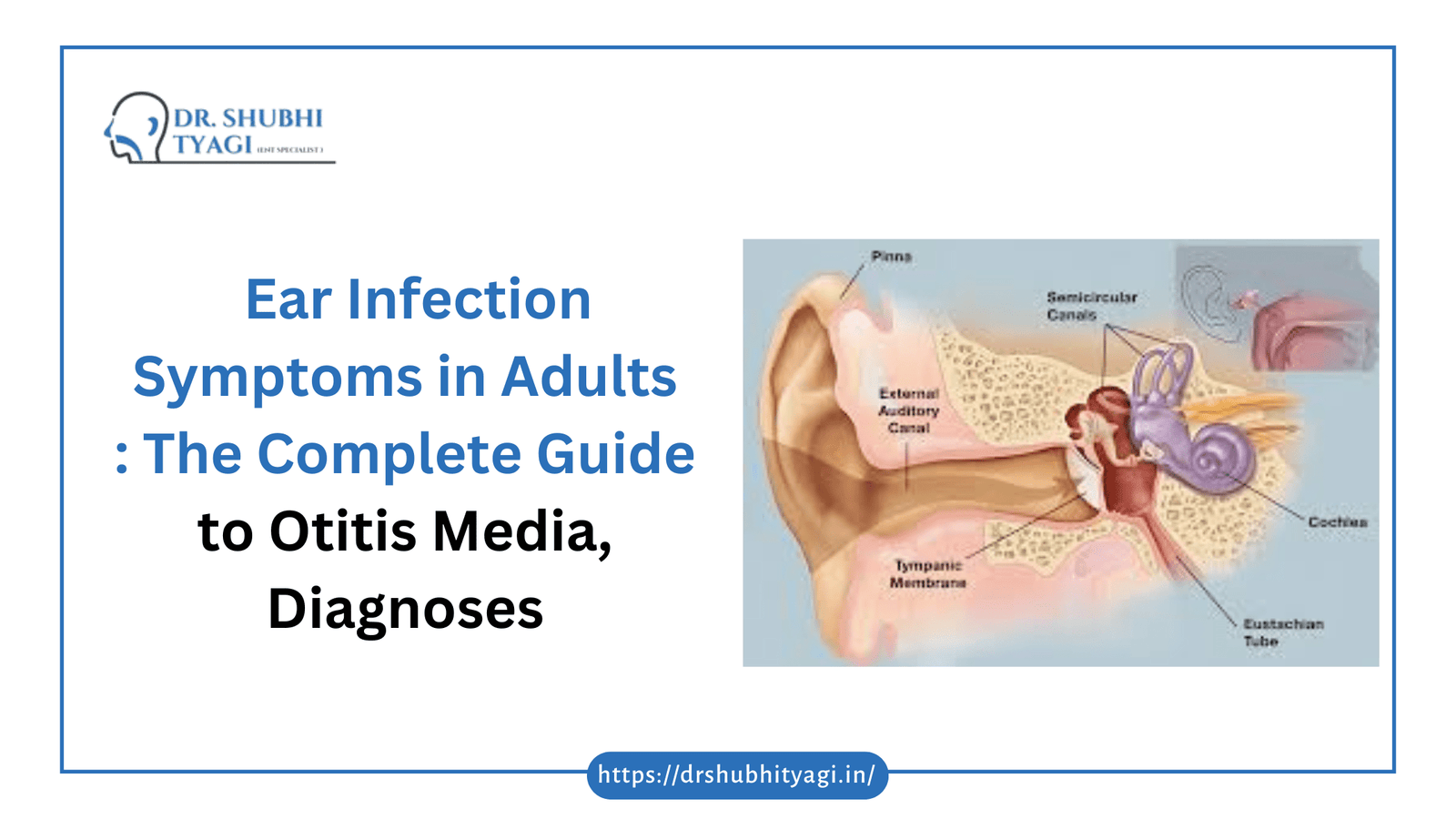
The human ear consists of three main parts:
- Outer Ear
- Middle Ear
- Inner Ear
An infection can develop in any of these areas, producing different symptoms depending on the affected structure.
Types of Ear Infections in Adults
| Type of Infection | Affected Area | Common Symptoms |
| Otitis Externa (Swimmer’s Ear) | Outer Ear Canal | Itching, redness, discharge, pain |
| Otitis Media | Middle Ear | Ear pain, pressure, hearing loss |
| Labyrinthitis | Inner Ear | Vertigo, dizziness, nausea |
| Chronic Otitis Media | Middle Ear | Recurrent discharge, hearing difficulties |
Different types of ear infection symptoms in adults may appear depending on whether the outer, middle, or inner ear is affected.
Outer Ear Infection (Otitis Externa)
It is an infection of the outer ear canal, and usually grows in the space behind your eardrum after moisture is stuck there following swimming or bathing. Increased moisture allows bacteria and fungi to flourish, which leads to infection.
Middle Ear Infection (Otitis Media)
Middle ear infections that occur behind the eardrum is one of the top ten causes of Ear Infection Symptoms in Adults. It’s a common complication after having cold, sinus infection or nasal blockage due to allergies.
Inner Ear Infection (Labyrinthitis)
Keep in mind, inflammation on the inner ear affects both hearing and balance. Infections, on the other hand, in this vicinity are usually related to a very dizzy experience with vertigo nausea and loss of muscular coordination.
Diagnosing An Ear Infection in Adults: Signs and Symptoms
By Understanding Ear Infection Symptoms in Adults, you can receive treatment before the condition progresses.
Common Symptoms Table
| Symptom | Description |
| Ear Pain | Sharp, throbbing, or persistent discomfort |
| Hearing Loss | Muffled or reduced hearing |
| Ear Fullness | Feeling of blockage or pressure |
| Tinnitus | Ringing or buzzing sounds |
| Ear Discharge | Clear, yellow, or green fluid |
| Dizziness | Balance issues or vertigo |
| Fever | Common in bacterial infections |
Ear Pain
The first things patients typically report are pain. It depends on how and where the infection occurs.
In adults, the middle ear pain is severe, especially when there is fluid behind the eardrum. The discomfort may become more painful when lying down or swallowing.
Feeling of Fullness and Pressure
Blocked sensation is one of the common Ear Infection Symptoms in Adults. This typically happens when fluid build-up or inflammation disrupts the normal regulation of pressure.
Hearing Changes
Temporary hearing loss is common. Voice can sound muted or the Sound may seem muted or far away because the regular vibration of the eardrum is blocked by fluid.
Ringing in the Ear
Tinnitus is when our brain may experience sounds like ringing, buzzing or clicking during an infection.
Dizziness and Vertigo
Dizziness, imbalance, and spinning sensations are Ear Infection Symptoms in Adults If Inner Ear Becomes Inflamed.
Ear Discharge
Depending on the underlying cause, discharge can be clear fluid to thick yellow or green drainage.
Ear infection symptoms causes in includes
Ear Infection Symptoms in Adults cause you may feel that the following factors puts your at risk:
Eustachian Tube Dysfunction
The Eustachian tube used for equalizing pressures between the middle ear and the throat. If this system is blocked due to allergies or infections, fluids can build up and become infected.
Respiratory Infections
One of the major causes of Ear Infection Symptoms in Adults is that bacteria and viruses can travel into the middle ear, and are often associated with colds, flu and sinus infections.
Allergies
Allergies can cause sinus and inflammatory problems leading to an effect on normal ear drainage.
Smoking and Air Pollution
Exposure to environmental irritants and tobacco smoke promotes inflammation which makes infection more likely to occur.
Structural Abnormalities
You may have a chronic condition that causes the ear canal to become blocked, which can lead to recurring Ear Infection Symptoms in Adults by preventing air from flowing through. Sinus conditions such as a deviated septum or nasal polyps are factors that affect airflow and drainage.
Warning Signs That Should Not Be Ignored
Although many infections improve with treatment, certain symptoms require immediate medical attention.
When to See a Doctor
| Warning Sign | Why It Matters |
| Sudden Hearing Loss | May indicate serious ear damage |
| Severe Vertigo | Possible inner ear involvement |
| Persistent Ear Discharge | May indicate chronic infection |
| Blood in Sputum or Blood-Stained Drainage | Requires prompt medical evaluation |
| High Fever | Could indicate severe infection |
| Facial Weakness | Possible nerve involvement |
In rare situations, Blood in sputum or blood-stained discharge associated with ear symptoms should never be ignored. Prompt evaluation is necessary to identify the cause and prevent complications.
Potential Complications of Untreated Ear Infections
Adult Ignoring Ear Infection Symptoms May Lead to Long-Term Health Problems.
Some of the common problems associated with ear which arise due to untreated infections include:
- Chronic hearing loss
- Recurrent infections
- Persistent tinnitus
- Balance disorders
- Eardrum perforation
- Mastoiditis
- Cholesteatoma
Infected fractures, tendons or any other superficial tissue require urgent assessment and when left untreated for many hours are associated with the risk of complications.
How Ear Infections Are Diagnosed
Accurate diagnosis aid to determine the cause and severity of ear infection symptoms in adults.
Physical Examination
An ENT specialist checks the ear canal and eardrum for any sign of infection, inflammation, fluid pooling, or structural issues.
Tympanometry
This exam checks eardrum movement and detects fluid behind your eardrum.
Hearing Tests
Audiometry determines either that it is a temporary loss, however, or that the hearing loss is related to more serious damage.
CT Scan and MRI
If symptoms persist despite treatment, or if the infection has become chronic, advanced imaging may be indicated.
Treatment Options for Ear Infection Symptoms in Adults
Treatment depends on the type and severity of infection.
Antibiotics
If a bacterial infection is present, for example, you might be administered oral antibiotics as well as ear drops or a combination of both.
Pain Management
Common pain-relief strategies include:
- Anti-inflammatory medications
- Warm compresses
- Prescription pain relievers
Ear Cleaning
You can however consider professional ear cleaning if a considerable amount of debris or discharge is seen.
Surgical Procedures
In chronic or acute infections, myringotomy and/or tympanoplasty may be performed.
Preventing Ear Infection Symptoms in Adults
There are many preventive steps that can minimize the risk of getting Ear Infection Symptoms in Adults.
Keep Ears Dry
Make sure to dry your ears thoroughly post swimming or bathing.
Avoid Ear Trauma
Avoid inserting other objects like cotton swaps deep into the ear canal.
Control Allergies
Treating any allergies helps with Eustachain tube function and fluid that may form.
Avoid Smoking
Also, smoking has shown to play a role in the development of inflammation and chronic infection relapse.
Treat Sinus and Respiratory Infections Early
Prompt treatment of upper respiratory infections can help prevent infection from spreading to the ears.
When Should You Visit an ENT Doctor?
Persistent ear infection symptoms in adults should never be ignored, as they may indicate an underlying ENT condition that requires expert evaluation. Early consultation with an experienced ENT doctor in Greater Noida can help identify the root cause, provide timely treatment, and prevent long-term complications.
If your symptoms continue despite medication or keep returning, it is important to seek care from a qualified ENT specialist. Whether you are looking for an ENT doctor in Pari Chowk, Knowledge Park, Alpha 1, Beta 1, Delta 1, Delta 2, Gamma 1, Gamma 3, or anywhere in Greater Noida, prompt diagnosis and personalized treatment can help ensure faster recovery and better long-term ear, nose, and throat health.
Expert Care for Adult Ear Infections
Dr. Shubhi Tyagi is a renowned Specialist who regularly treats patients with recurrent Ear Infection Symptoms in Adults and provides diagnosis and management of diverse ear, nose & throat conditions.
She not only treats ear infections, hearing pathology and sinus disease but is also a sleep apnea expert specializing in airway related and sleep disordered breathing.
Don’t wait for a simple ear ache to turn into something more serious. Get a proper medical checkup from the best ENT doctor in Noida.
Conclusion
It should never ignore Adult Ear Infection Symptoms. Conditions like ear pain, hearing loss, pressure weariness, dizziness, tinnitus as well as discharge should be dealt with professionally to treat a hidden infection.
Complications can be prevented, and hearing is preserved with the proper treatment especially if diagnosed early. Timely ENT evaluation is the best way to recover in case of persistent Ear Infection Symptoms In Adults.